
I spent three weeks reading creatine studies. Here's what nobody tells women.
I write about supplements for a living, and I've tried more of them than I'd like to admit. Most disappear from my bathroom shelf within a month. So when creatine kept showing up in cognitive function research — not gym research — I had to look closer.
What I found changed how I think about it.
You've probably noticed it. You're in a meeting and the word you need is gone. Not a major memory lapse — just a half-second delay that wasn't there two years ago. Or you hit 3pm and your brain simply checks out. Coffee doesn't fix it anymore.
It's not dramatic. It's just... there.
For a while I assumed it was sleep, or screens, or the natural cost of being a woman in her thirties who works for a living. Some of that's true. But it turns out a part of it has a much simpler explanation than I expected — and a much simpler intervention.
Creatine has a branding problem.
It's marketed in black tubs with lightning bolts, sold next to pre-workouts in shops that smell faintly of protein farts. Most women have either dismissed it as "a gym thing" or tried it once, hated the experience, and never gone back.
If you've used monohydrate before, you probably remember the chalky taste. The gritty texture at the bottom of the glass. The bloating. One Indian survey found roughly 60% of people who try creatine quit within a few weeks — not because it doesn't work, but because the experience is miserable.
Which is a shame, because the research has been quietly piling up — and a lot of it has very little to do with biceps.
I started reading the actual clinical literature, not supplement marketing. The data flipped my assumptions.
A 2024 meta-analysis pooled 16 randomised controlled trials — 492 participants — and found that creatine supplementation significantly improves memory, processing speed, and attention.
Here's the part that stopped me: women showed roughly 2.5× greater improvement in processing speed compared to men.

Women showed 2.5× greater cognitive improvement than men. Lower baseline stores = more headroom.
The leading explanation is that women start with lower baseline creatine stores than men, so they have more headroom to gain from supplementation. Most of us are running our brains on a depleted system without realising it.
Creatine isn't really a muscle supplement that happens to help the brain. It's the other way around. Your brain consumes about 20% of your body's energy, and creatine powers the rapid ATP regeneration system it depends on. The muscle benefit is the side effect — not the main story.
Once I understood that, the question wasn't whether I should take it. It was which one — and could I find a version I'd actually stick with.
SETU's version
I came across SETU's Sparkling Creatine while looking at brands that had tried to solve the experience problem.
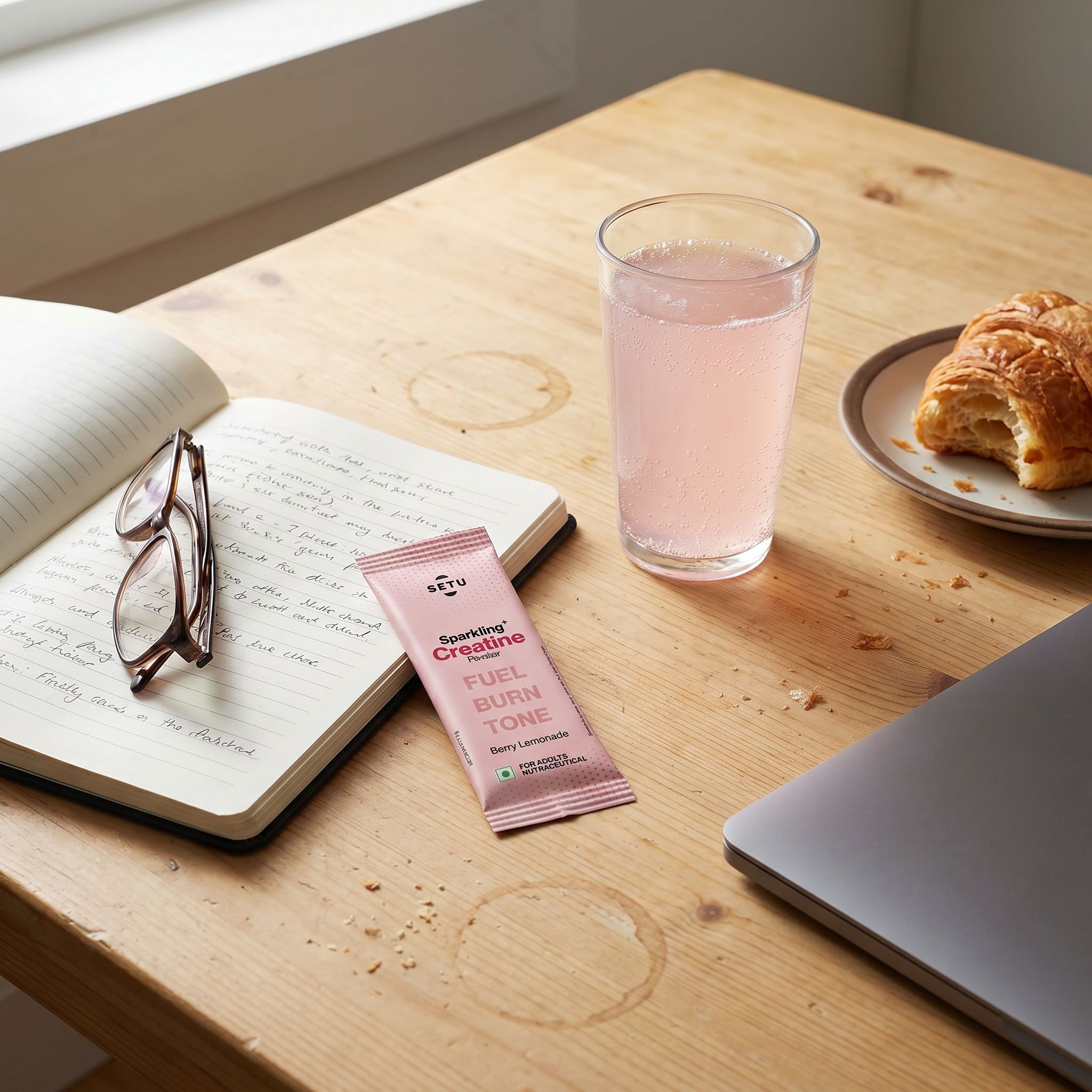
Three formulation choices stood out.
They use creatine HCL, not monohydrate. HCL dissolves dramatically faster — somewhere in the 40–60× range. That solubility isn't a marketing claim you have to take on faith. Drop the sachet into water and watch. It vanishes in about thirty seconds. No grit, no settling, nothing sitting in your stomach.
They added two ingredients most creatine brands skip. Beetroot extract for blood flow, L-Carnitine for cellular energy. More on why this matters in a moment.
They made it sparkling. Berry lemonade. Fizzy. Not "tolerable" — actually pleasant. The reasoning is straightforward: if it tastes like medicine, you stop taking it.
To be honest, at ₹999 for 25 sachets it isn't the cheapest creatine on the shelf. Plain monohydrate costs roughly a third of this. What you're paying for is three active ingredients in one sachet, a format you'll actually use daily, and a dosing protocol that doesn't require a shaker bottle. Whether that's worth it depends on whether you've quit creatine before because the experience wore you down. For me, it was.
The Triple Combo: how it actually works
A named framework is easier to remember than a list of ingredients, so here's the simplest way to think about it.
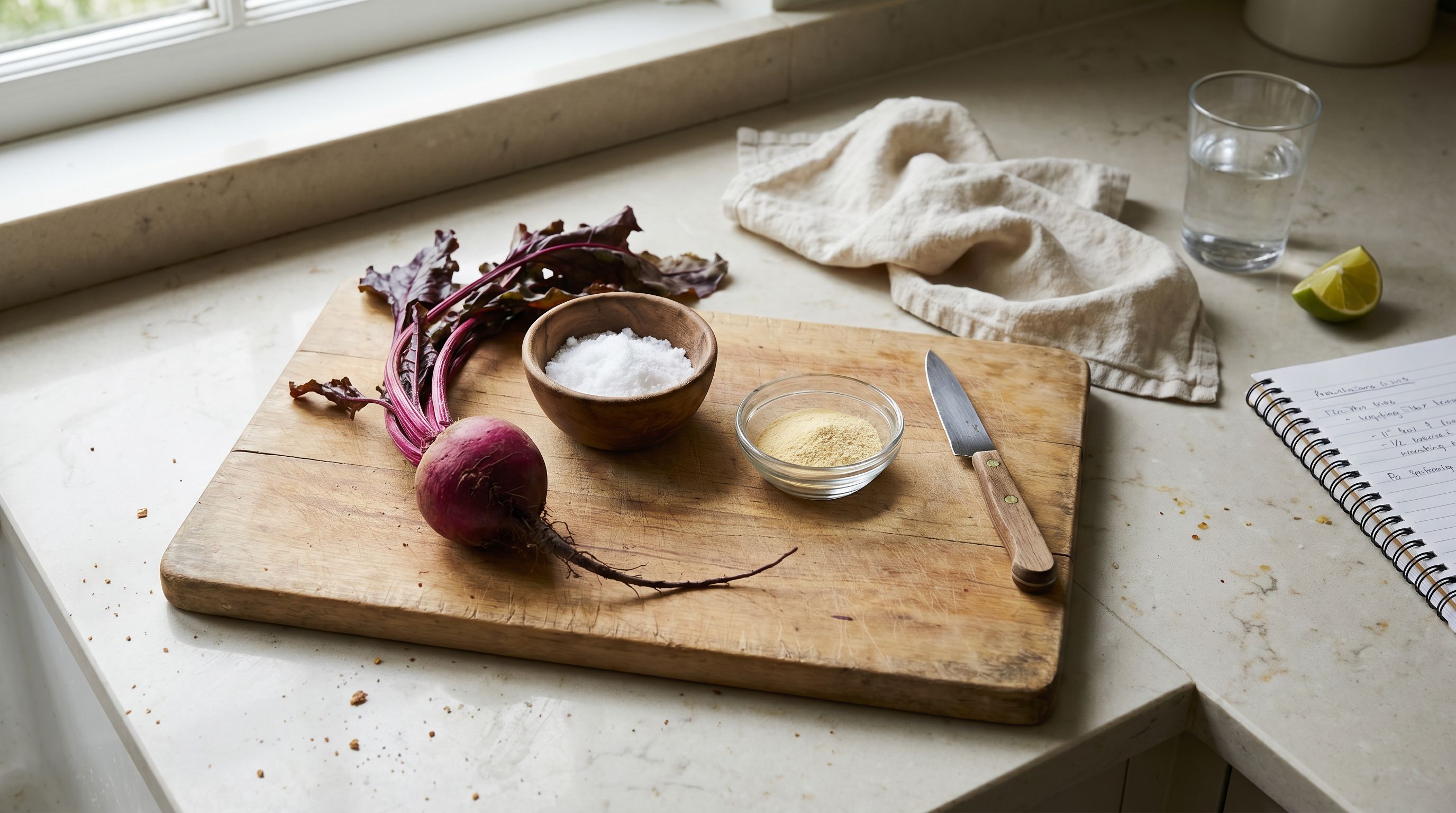
Creatine HCL (2g) — the fuel
Inside your cells, creatine becomes phosphocreatine — your body's rapid ATP regeneration system. Think of it as the emergency battery pack for your brain and muscles. The HCL form dissolves fully, so nothing sits in your gut waiting to be processed.
Beetroot extract — the delivery
Beetroot raises nitric oxide, which widens blood vessels. More blood flow means more oxygen and nutrients arriving where you need them — during a workout, during a long meeting, during a school pickup at the end of a long day.
L-Carnitine — the activator
L-Carnitine moves fatty acids into your mitochondria for energy production. The interesting part: a 2017 randomised trial found that creatine and L-Carnitine together activate mTOR, the protein synthesis switch your body uses to build and preserve lean muscle. L-Carnitine alone showed no significant effect. The combination is what matters.
It's a small dose — one sachet — doing three jobs at once.
Why format matters more than it sounds
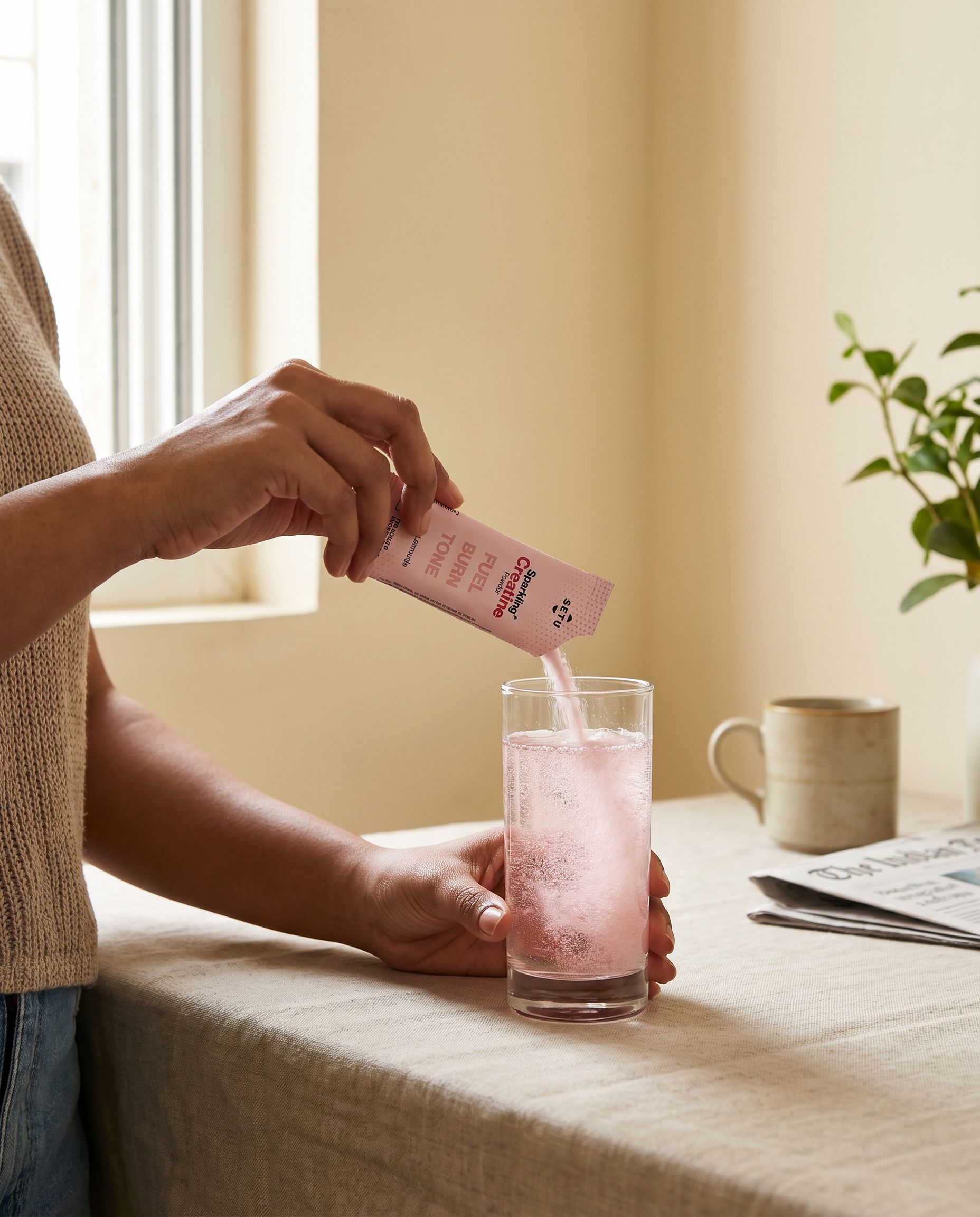
Most creatine routines look like this. Scoop powder into a shaker. Add water. Shake for thirty seconds. Try to drink the slurry before it settles. Wash the shaker. Do it again tomorrow.
SETU's version is: tear open a sachet, drop into water, watch it fizz, sip a sparkling berry lemonade. Done in thirty seconds.
It sounds trivial. It isn't. The supplement that works is the one you actually take every single day for eight weeks. A fizzy drink you enjoy beats a chalky shake you dread, every time. Compliance is the variable nobody talks about — and it's the one that decides whether the science actually plays out in your body.
What to expect (honestly)
I want to set realistic expectations, because most supplement marketing doesn't.
You'll notice the taste and the format. The fizz, the flavour, the simplicity of it. Your body is starting to build creatine stores. No visible changes yet — don't expect them.
Some people report feeling slightly sharper. Marginally more workout endurance. It's subtle. If you feel nothing yet, that's normal.
With consistent daily use plus your normal exercise, strength and recovery improvements are common. You might notice you can push a bit harder, or bounce back faster the next day.
This is the clinical milestone. Most of those 16 RCTs measured outcomes at the eight-week mark and found significant improvements in memory, processing speed, and muscle strength. If you've stayed consistent, this is where it compounds.
The point: creatine isn't a stimulant. It doesn't hit on day one. It works the way nutrition works — slowly, then suddenly.
Three things I want to address before you decide
On price
₹999 for 25 sachets is ₹40 a day. Less than a chai and a biscuit at most cafés. You're getting three active ingredients — creatine HCL, beetroot, and L-Carnitine — that would cost more bought separately, in three different products, none of which you'd remember to take.
On bloating
If you've quit creatine before because of bloating, you were almost certainly using monohydrate. HCL dissolves faster and doesn't sit in your gut. The 2024 study I mentioned earlier specifically found that HCL increased intracellular water volume — good, that's muscle hydration — without increasing extracellular water, which is the visible bloat people complain about.
On "will I get bulky?"
No. Creatine supports lean muscle preservation; it doesn't cause bulk. Visible muscularity requires years of progressive overload plus a caloric surplus. Creatine alone can't do that. What it can do: help you feel stronger, recover faster, and think more clearly.
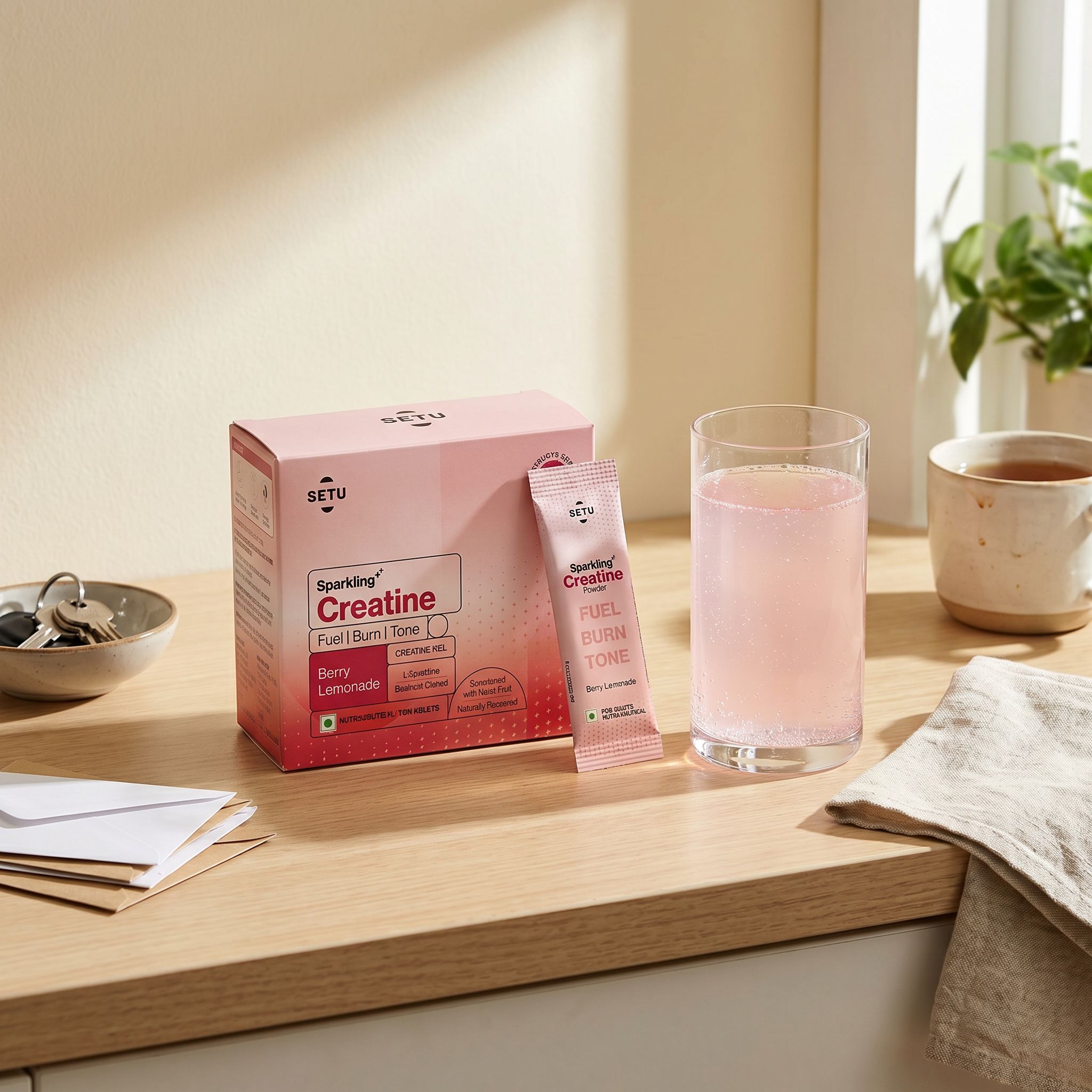
Try it and see if it fits
Sparkling Creatine is a sparkling creatine HCL with beetroot and L-Carnitine. ₹999 for 25 sachets — roughly ₹40 a day — for a supplement backed by 16 clinical trials. Give it eight weeks of daily use alongside your normal routine. If you don't notice a difference, it isn't for you, and that's fine.
Try Sparkling Creatine — ₹999This article contains sponsored content. Anjali Menon is an independent health writer. Editorial decisions and product recommendations are her own.